 We're open every day from 10 AM to 4 PM!


1948 Bown Hand-Built Autocycle
A rare glimpse into Britain’s post-war transport revolution
On display for a limited time at the Motor Museum of Western Australia
The 1948 Bown Hand-Built Autocycle represents a fascinating turning point in British light transport. Although Bown-branded autocycles are most closely associated with production from 1950 to 1958, this autocycle captures the crucial 1948 transition from the established Aberdale Autocycle to the later Bown Auto-Roadster.
The Bown and Aberdale connection
The Bown name has a long engineering pedigree. The Aberdale Cycle Company, founded in 1919 by the Levy family, acquired the struggling Bown company during the 1930s. Importantly, William A. R. Bown joined the Aberdale board, bringing technical motorcycle-engineering expertise to a business best known for high-volume bicycle production.
That partnership proved especially valuable after the Second World War. Demand for inexpensive personal transport surged, and Aberdale used Bown’s engineering knowledge to enter the powered two-wheeler market.
The machine displayed here is therefore best understood as a hand-built transitional Bown: a vehicle created at the moment when Aberdale’s autocycle programme was evolving into the Bown marque’s later production models.
Powered by Villiers
The original Aberdale Autocycle, launched in March 1947, was powered by a 98cc Villiers Junior de Luxe engine. It used petrol lubrication, direct flywheel-magneto lighting and pressed-steel blade girder front forks.
These were practical, robust solutions for the era. The Villiers engine was compact and economical, while the simple rigid open-truss frame kept the machine light and relatively affordable to build. Contemporary accounts suggest such autocycles could cruise at around 30 mph and achieve exceptional fuel economy—ideal qualities for post-war Britain.
Extensive side panelling below the fuel tank shielded the rider from the engine, giving the machine a tidier, more finished appearance than many basic autocycles of the period.
From Aberdale to Bown
By late 1948, Villiers had announced its new 2F engine, prompting Aberdale and other British manufacturers to redesign their machines. Aberdale exhibited a prototype at the Earls Court Show in November 1948; the replacement model would soon be sold under the Bown name.
The new design featured a more sophisticated cradle-type frame with duplex down tubes, a petroil tank positioned between the frame tubes, and continued use of the pressed-steel blade girder front fork. It retained the practical features that made autocycles popular, including direct flywheel-magneto lighting and extensive engine panelling.
This vehicle embodies that evolution: it stands between the early Aberdale Autocycle and the Bown Auto-Roadster that followed.
On Display For A Limited Time
Please note that many of the vehicles displayed at the Motor Museum of Western Australia are on loan to us from private collectors and enthusiasts.
Our displays change regularly to showcase a wide variety of vehicles and motoring history, so if you want to experience these rare and extraordinary cars in person, we encourage you to visit us soon.
Whether you are a passionate car lover or simply curious about automotive heritage, the Motor Museum offers a unique and engaging experience that evolves throughout the year.
Visit Us
For more information about visiting the Motor Museum of Western Australia, including opening hours, ticket prices, and current exhibitions, please visit our Visitor Information page or contact us directly.
We are open every day from 10 AM to 4 PM (closed Christmas Day) at Whiteman Park, 233a Drumpellier Drive, Whiteman, WA 6068.
Tickets can be purchased online for your convenience or directly at the museum entrance.
For enquiries, group bookings, or special events, please call us on (08) 9249 9457 or email manager@motormuseumwa.com.au.
We welcome visitors of all ages and motoring interests and look forward to sharing Western Australia’s rich automotive history with you.
Discover More
-
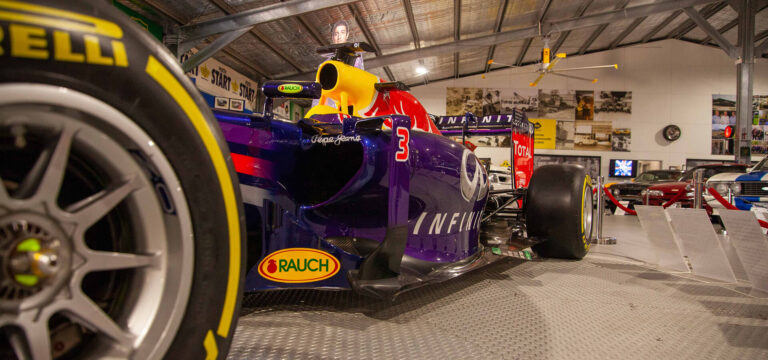
Red Bull F1 Racing Car
Daniel Ricciardo’s very generous offer to favour the Motor Museum with a long term loan of Red Bull RB 10, the car..
-

2024 Ferrari 296 GT3 Racer
Discover the 1948 Bown Hand-Built Autocycle: a rare post-war British machine linking Aberdale, Bown engineering and the birth of affordable motorised transport.