 We're open every day from 10 AM to 4 PM!


1923 Stanley Steamer

The below is an excerpt from the February 2026 Edition of the Museum Musings
The 1923 Stanley Steamer was known for its quiet operation, high torque, and unique external combustion engine, representing the final era of steam cars in the U.S. automotive industry.

The Stanley Motor Carriage Company, founded by twins Francis and Freelan Stanley, operated from 1902 to 1924. By 1923 steam cars were becoming rare as internal combustion engines dominated the market, but the Stanley Steamer remained a symbol of innovation and craftsmanship. They were a key part of early automotive history. The Stanley Steamer we have on display would have been among one of the last of this type to be manufactured by the company.
The car utilised an external combustion engine powered by a steam boiler, which allowed the car to generate power in advance rather than on demand. The boiler operated at a nominal pressure of 600 pounds and could run on kerosene, which was safer and more efficient than petrol.
Steamers like this model were known for producing large amounts of torque, requiring no gears, and offering a smooth, quiet ride.
Water consumption averaged about one gallon per 10 to 12 miles.
Starting a Stanley Steamer required approximately 20 minutes to build sufficient steam pressure. The engine had few moving parts and was mechanically simpler than contemporary internal combustion vehicles, which contributed to their reliability and ease of maintenance. The engine had two double-acting cylinders side by side equipped with slidevalves. Drive was transmitted directly by the crankshaft to a rear-mounted differential.
Early History of the Stanley Motor Carriage Company
Twins Francis and Freelan Stanley made their first car in 1897. During 1898 and 1899, they produced and sold over 200 cars, more than any other U.S. maker.

In 1899, Freelan and his wife Flora drove one of their cars to the top of Mount Washington in New Hampshire, the highest peak in the north eastern United States. The ascent took more than two hours and was notable as being the first time a car had climbed the 7.6-mile-long (12.2 km) Mount Washington Carriage Road. The Stanleys later sold the rights to this early design to Locomobile.
In 1902 they formed their own Stanley Motor Carriage Company. Francis died in 1918 when he steered his car off the road into a woodpile while attempting to avoid farm wagons travelling side by side. After the death of Francis, Freelan sold his interests
to Prescott Warren. The company suffered a period of decline when better cars were now available at much lower cost. For example, a 1924 Stanley 470 sedan cost $3,950, compared with less than $500 for a T Model Ford.
The widespread use of electric starters in internal combustion cars, beginning in 1912, eroded the remaining technological advantages of the steam car.
On Display For A Limited Time
Please note that many of the vehicles displayed at the Motor Museum of Western Australia, including this 1925 Citroen 5CV Type C, are on loan to us from private collectors and enthusiasts.
Our displays change regularly to showcase a wide variety of vehicles and motoring history, so if you want to experience these rare and extraordinary cars in person, we encourage you to visit us soon.
Whether you are a passionate car lover or simply curious about automotive heritage, the Motor Museum offers a unique and engaging experience that evolves throughout the year.
Visit Us
For more information about visiting the Motor Museum of Western Australia, including opening hours, ticket prices, and current exhibitions, please visit our Visitor Information page or contact us directly.
We are open every day from 10 AM to 4 PM (closed Christmas Day) at Whiteman Park, 233a Drumpellier Drive, Whiteman, WA 6068.
Tickets can be purchased online for your convenience or directly at the museum entrance.
For enquiries, group bookings, or special events, please call us on (08) 9249 9457 or email manager@motormuseumwa.com.au.
We welcome visitors of all ages and motoring interests and look forward to sharing Western Australia’s rich automotive history with you.
Discover More
-
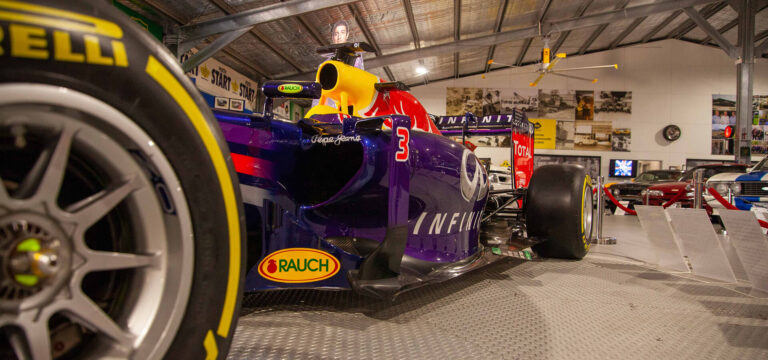
Red Bull F1 Racing Car
Daniel Ricciardo’s very generous offer to favour the Motor Museum with a long term loan of Red Bull RB 10, the car..
-

1970 Rolls-Royce Silver Shadow
Step behind the wheel of a 1970 Rolls-Royce Silver Shadow and experience the luxury, craftsmanship and engineering of one of Britain’s most prestigious motor…
